

North Park and Golden Hill have almost no ghost stories with paper behind them. What they have is better: a federal nomination that refuses to confirm its own poolside plaque, a widow written out of the neighborhood she platted, and the deadliest air disaster in California history. Eight stops, built from a National Register nomination, two city historic surveys, an NTSB accident report and a 1913 newspaper interview, not from twenty years of copied blog paragraphs.
Two of these eight stops carry a haunting claim of any kind, and both of those claims turn out to have a traceable floor, a date before which nobody was telling the story. One is a 2010 article written by a theater fundraiser. The other is a cluster of listing sites repeating each other with no witness, no newspaper and no investigation underneath any of it. Both are told here, attributed, with the doubt attached, because you will hear them from somebody in this town anyway.
A note on addresses before you start walking, because it governs half this page. Four of these eight stops publish no address, no cross street and no pin, and that is permanent rather than a gap in the research. People live in those blocks now. The story is real, the location stays private, and where that decision costs the page something, this page says so out loud instead of quietly filling the hole. North Park and Golden Hill are not currently a stop on any Haunted San Diego Ghost Tours route. Our nightly tours run in Old Town and the Gaslamp Quarter.
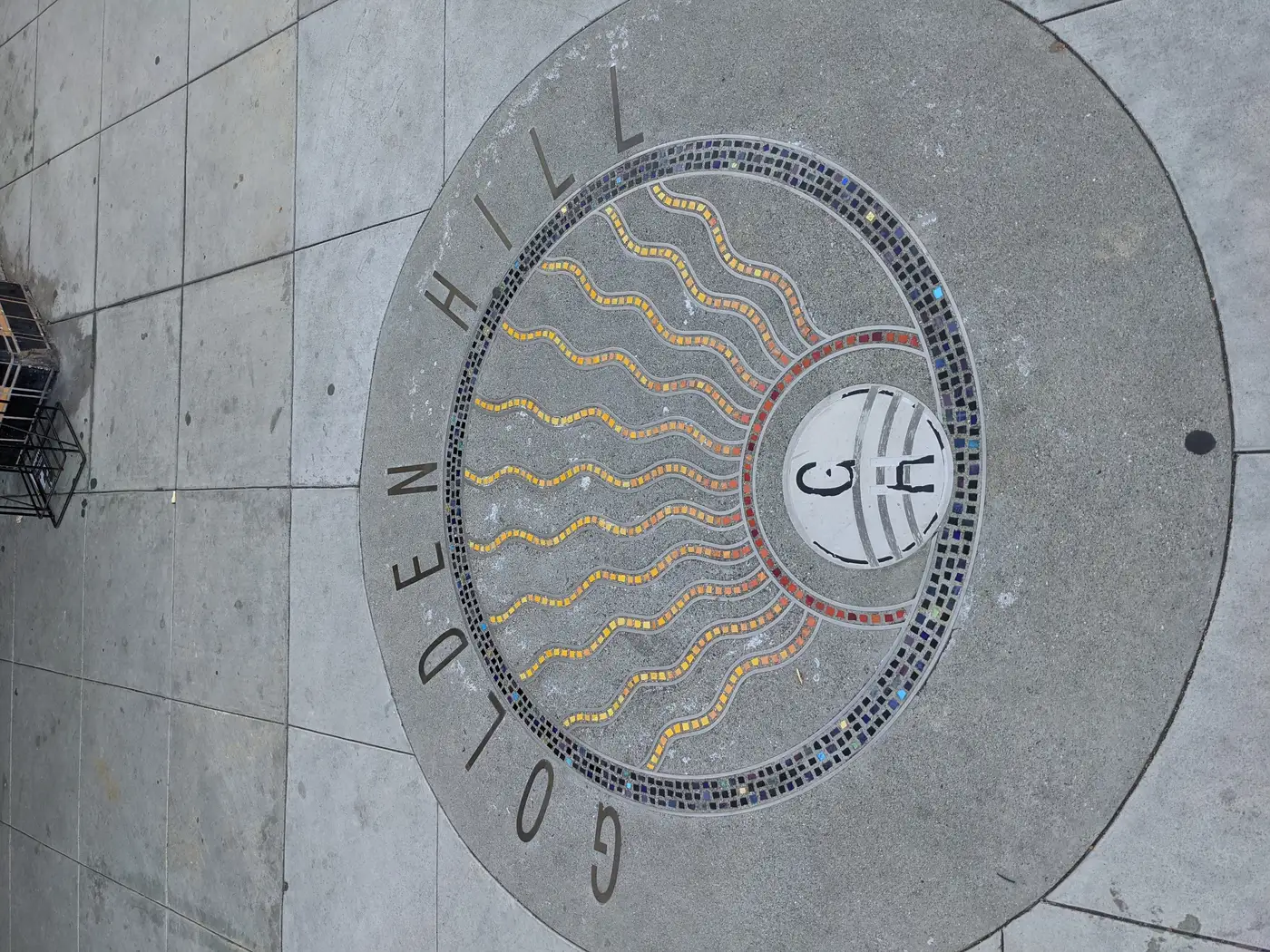
“Golden Hill mural” by Mds08011, CC BY 4.0, via Wikimedia Commons.
The eight stops
1. The North Park Water Tower: The Tin Man
What you’re looking at. Twelve steel legs, a conical cap, a little lantern on top, at 4236 Idaho Street, and a flat concrete deck beside it with soccer fields on it. That deck is the roof of a working municipal reservoir, city-owned, inside a historic district covering two full blocks between El Cajon Boulevard and Polk Avenue.
Half this neighborhood calls the tower the Tin Man, and for once a piece of folklore has a cleaner paper trail than the fact it sits next to. The author of the building’s 2013 National Register nomination states in his own footnote that he first recorded local use of the nickname during his 1989 field survey of the tower. A named person, a named survey, a year. He also ran an informal survey of residents and quoted them: one described its “quirky steam-punk charm that somehow reminds me of the Tin Man in the Wizard of Oz.” One gives directions by it, turn south on Oregon, first street west of the water tower. One said that flying home, they look out the airplane window for it to find their neighborhood, and that it is “like the slightly scrawny, yet beloved family pet that fills you with warmth as it welcomes you home.” Some residents have it tattooed on them.
The reason the tank exists at all is municipal arithmetic. By the early 1920s the City Engineer and the fire insurance companies both worried that a major fire could drain the University Heights reservoirs, leaving the rest of San Diego dependent on a single 24-inch wooden pipeline. The Water Department’s engineer proposed a tank instead of a new pipeline: the tank at $69,150, the pipeline at $330,000 to $400,000. They built the tank. Completed in 1924: a 54-foot-wide, 52-foot-tall cylinder holding 1.2 million gallons, standing on twelve Z-laced steel legs, each 75 feet tall, total height 127 feet 5.5 inches. Comparable surviving elevated tanks of this era typically stand on four, six, or eight legs; twelve makes this one, as far as the nomination could establish, the only known example of its kind in Southern California.
And here is the fact that beats every ghost story on this block: in 1957 the city leased the reservoir roof to Tower Motors, Inc., a local dealership, to run a used car lot on top of the municipal water supply. The lease was renewed in 1963, 1968 and 1972. After the car lot came a tennis center, closed around 2000, and then the two soccer fields up there now. Seventy years of renting out the roof of a working reservoir. The tank itself has been empty since the 1990s, taken out of service on seismic grounds; it had actually been redundant since 1952, when a newer filtration plant opened higher up the hill. There is no ghost story here, and none is invented for one.
What is contested or thin here
In 1924 the builders called this the largest elevated tank in the world. The nomination hedges the claim both times it repeats it, “was reportedly the world’s tallest at the time” and “was touted as the largest elevated tank in the world,” footnoted to a 1923 city plan document and a 1924 trade magazine, which is to say, to the people who built it and the press covering them. Nobody has produced an actual 1924 survey of the world’s water tanks that settles it. What is true is that in 1924 they said it. That is a fact about a claim, not a fact about tanks, and it is carried here as exactly that.
2. The Observatory North Park: A Ghost Story With a 2010 Floor
What you’re looking at. Griffins over the door at 2891 University Avenue, put there as guardians of treasure, and behind them a theater that opened in January 1929.
This house was built in 1928 for a technology most of the industry had not committed to yet. It was designed from the start to play sound, confirmed independently by the city’s own 2016 historic resources survey: built to project synchronized sound and motion pictures at a time when most theaters were still being built for silent film. Emil Klicka, who had come to San Diego from Chicago in the early 1920s, imagined North Park as “a city of our own,” with this corner as its commercial heart, and in 1928 he funded a two-story building here at a cost of $350,000, a vaudeville and motion picture theater, a bank, a street-level shop, medical offices upstairs. It opened as a Fox West Coast house. Shopping centers eroded the business through the 1960s; it stopped running as a movie house in the 1970s, spent a stretch as a church, and the city bought it in the late 1980s and let it sit empty for close to twenty years before a 2000 to 2005 renovation reopened it under Lyric Opera San Diego.
Now the ghosts, and this one is unusually easy to trace. The story appears in a signed article published by the North Park Historical Society in August 2010, written by the fundraising officer of the company then running the theater. She wrote that “it is widely believed that there are ghosts living in the Theatre,” and that the silent-film stars Harold Lloyd and Bebe Daniels are thought to be “continuing their life-long love affair” here, laughter, whispers, someone calling for someone else, heard especially during the building’s years as a church. The article’s very next paragraph points readers to a commercial ghost tour company. No earlier telling of the story has ever turned up, not a newspaper, not a newsletter, nothing from before the restoration. So the legend has a 2010 floor.
The documented half is better anyway. Harold Lloyd hired Bebe Daniels as his leading lady in 1914, when she was fourteen. They made silent shorts together, were engaged, separated, and stayed friends for the rest of their lives. He married someone else in 1923; she married someone else in 1930. Harold Lloyd died on March 8th, 1971, in Beverly Hills. Bebe Daniels died on March 16th, 1971, in London. Eight days apart. When they had seen each other in London five months earlier, he was still wearing a ring she had given him more than fifty years before. The current operator did not write any of this and has not adopted it; it is not their story to tell, and it is not told here as if it were.
What is contested or thin here
The one sentence holding the legend to this specific building, that Harold Lloyd “owned a home in San Diego,” has no address, no source and nothing behind it. Not found, not disproved, just unsupported. And the neighborhood historical society lists four “firsts” for this theater, the first Fox house with Vitaphone sound among them; all four rest on the same single 2010 article, exactly the kind of claim opening-night publicity generates, and nobody has yet opened the January 1929 newspaper coverage that would confirm or expose them.
3. The Lafayette Hotel: A Plaque That Says Tarzan, A Federal File That Says Nobody Knows
What you’re looking at. A full city block on El Cajon Boulevard, and behind the building a swimming pool you cannot see from the street.
Beside that pool is a plaque saying Johnny Weissmuller, five-time Olympic gold medalist and the man who played Tarzan, designed it to Amateur Athletic Union specification with underwater lighting built in. The hotel’s 2012 federal nomination says, in its own words: “No plans were found for the hotel’s swimming pool, the design for which has been attributed through newspaper accounts to Olympic swimmer and Tarzan television show actor Johnny Weissmuller. Weissmuller’s contributions to the property, although unsubstantiated through building or other historical records, is recognized through a plaque installed adjacent to the swimming pool.” A plaque in the ground and a federal document in a file, both true at once, disagreeing about the same water.
This hotel should not exist, or not when it did. Architect Frank L. Hope Jr. designed it between 1943 and 1945, wartime, when building materials in San Diego were directed to war support industry; the federal nomination calls the campaign to build it “one of the few private efforts to have occurred in San Diego during the World War II period.” Opening ceremonies for the Imig Manor ran a full weekend in late June 1946, boasted as the first post-war hotel on the West Coast. It sold in 1949 to a syndicate including Conrad Hilton, became the Hotel Manor by 1950, and the Lafayette from 1952. Bob Hope was “said to be” the first to sign the register, exactly how the source hedges it. But the best thing that ever happened at this pool was not a celebrity: Florence Chadwick, a San Diego native, trained here to prepare for her 1950 swim across the English Channel, which she crossed faster than any woman before her. Barron Hilton brought the Chargers down from Los Angeles in 1961, and the team ran its offices out of this hotel until 1969.
There is also a version of this hotel you will hear from somebody in this town that is not in the hotel’s own history at all. Non-operator paranormal blogs, not tour companies, describe cold spots, piano music with nobody playing, a figure in period dress, a boy said to linger in the basement, and an elevator said to run on its own. We found no newspaper, no hotel record and no named witness behind any of it. One detail is worth naming honestly: the name attached to the apparition in this version is the same name attached to an entirely different downtown hotel’s ghost story elsewhere in this project’s own research, the kind of thing that happens when a name circulates faster than anyone checks where it came from. Take it with a very large grain of salt.
What is contested or thin here
One thing does firm the Weissmuller attribution up in the legend’s favor, in the same document that refuses to confirm it: the nomination’s own summary of the 1946 opening repeats the attribution in a softer form, “cited as having been designed by,” footnoted to the San Diego Union of June 23rd, 1946. So this is not a tale invented in the 1990s to sell rooms; it is at least as old as the hotel’s own opening publicity. The hotel has been saying it since the week it opened, and the federal record says no building plan substantiates it. Both are facts. Neither cancels the other.
4. Hartley’s North Park: The Widow Who Platted It
What you’re looking at. A commercial intersection with no plaque on it. This stop stays at area level; one period address in the underlying research is an occupied private house and appears nowhere here.
Every person who says “North Park” is repeating a real estate description of forty acres of lemon trees. In 1893, a farmer named James Monroe Hartley bought forty acres on what was then the northeastern edge of San Diego, planted lemons, and because his land sat directly north of the city’s big undeveloped park, not yet called Balboa, named the place Hartley’s North Park. In 1896 the family moved into a six-room house at this corner. By 1900 the entire area between what is now Boundary Street, Florida Canyon, Adams Avenue and Switzer Canyon held seven landowners and fifty-five residents in total.
Here is the part that gets repeated wrong, and it got repeated wrong inside this project’s own earlier research before anybody checked it: that James Monroe Hartley subdivided the tract that carries his name. He did not. He was dead. A severe drought in 1903 and 1904 decimated the citrus groves; Hartley died in 1904; the family gave up the orchard business and kept the land. The document that establishes this sits in an appendix of a public city survey, and it names the actual subdivider: Mary J. Hartley, his widow. He bought the forty acres and gave them the name. She platted the streets and sold the lots, and it is her name on the city’s own document. She shows up again, too: when residents circulated a petition for fire protection, Mary Jane Hartley donated land on University Avenue, and Fire Station No. 14, a Spanish Colonial Revival building built for the 1915 Panama-California Exposition and relocated here after the fair closed, was moved onto it.
What is contested or thin here
The city’s own table gives the subdivision date as either 1910 or 1911-12 depending on which record you check, and does not pick between them. This page does not pick either. The recorded tract map at the county recorder would settle it directly and has not been pulled.
5. A Minute Past Nine on a Clear Monday Morning
What you’re looking at. Nothing, and that is permanent. This stop carries no address, no block, no cross street and no pin, and it never will. People live there now. There is no marker, and there is nothing a stranger walking past would notice.
On a clear Monday morning in September 1978, a jet on approach to Lindbergh Field and a small training plane were each told to keep the other in sight. The jet’s crew said they had it. By the time it mattered, they did not, and they never said so. The document is the National Transportation Safety Board’s own accident report, adopted in April 1979. At 9:01 that morning a Pacific Southwest Airlines Boeing 727 and a Cessna 172 out of Montgomery Field collided about three miles northeast of the airport. The weather was clear; visibility was ten miles. Both people aboard the Cessna were killed. So were 135 people aboard the 727, and seven people on the ground. Nine more on the ground were injured. Twenty-two homes were damaged or destroyed. It is the deadliest air disaster in California history, and it came down in a North Park neighborhood that looks a great deal like the ones nearby.
The board’s probable cause, in its own words, was the flight crew’s failure to comply with a maintain-visual-separation clearance. That is the finding everybody repeats. Almost nobody quotes the next paragraph: contributing to the accident, the board wrote, were the air traffic control procedures then in effect, which let controllers use visual separation on potentially conflicting tracks even when radar could have provided lateral or vertical separation instead. One board member dissented in print, arguing the system’s inadequacies belonged in the probable cause itself, writing that the clearance “placed the pilot in an exclusively see-and-avoid situation where the last redundancy of the system was removed.” About the seven people killed on the ground, in their own houses: the San Diego Air and Space Museum’s own account of that morning records that two of the seven were children.
There is no documented ghost story attached to this, and there are ghost stories told about it anyway. Dedicated “haunted places” listing sites, not tour companies but the listing sites tour companies shop from, say that people living near the site report knocking, objects moving, shadow figures and voices of children. Here is what sits underneath that: nothing. No newspaper, no named witness, no investigation of any kind. We went looking specifically for one and found four sites repeating each other. There is a good chance somebody simply wrote it. What cannot be established is whether it grew out of the museum’s own published fact above, which is a matter of public record and would have been easy for anyone to read, or arrived on its own. Both halves are told here, plainly, because you will hear one of them from somebody in this town.
What San Diego actually has instead is a memory, and it is not kept where it happened. In Balboa Park, the San Diego Air and Space Museum keeps a permanent memorial to the people who died that morning, in its Golden Age of Flight Gallery, and says it remembers them there every day, not only on the anniversary. That is where families go. Nobody goes to the block; it was rebuilt, the damaged houses went back up, the streets filled in, and there is nothing to look at. The one first-hand account of the aftermath this research could find turned up in a 1985 San Diego Reader cover story about the city’s homicide detectives, belonging to a man the paper agreed not to name. He told the Reader the job had cost him a complete physical and mental breakdown and eventually his career. Asked where it started, he did not name a murder. He named this. He had been on the detail that collected the bodies after the crash. Seven years on, from a man who had since left the job entirely, and he was still counting from it.
6. The Golden Hill Fountain Grotto: The Garden Even Local Park Lovers Cannot Find
What you’re looking at. From the road above, a canyon most people drive past. Below it, folded into the slope, twin cobblestone stairways curving down to a fountain that has not run since maybe the 1930s, inside Golden Hill Park off Golden Hill Drive near 26th Street.
Around 1900, a group of Golden Hill residents mounted their own grassroots effort to beautify this corner of the city’s then-undeveloped park, financing a golf course, an aviary, a bandstand and what the city credits as San Diego’s first public playground. The grotto is what survives of that: a rustic Arts and Crafts inglenook of stone stairways, walls and radiating trails, built by Golden Hill people on Golden Hill ground. Its architect is settled: Henry Lord Gay, who also designed a downtown brick building that stands today built directly into the left field corner of the city’s baseball stadium, seen by nearly every San Diegan who has watched a home game on television. Almost nobody has seen his other one, at the bottom of this canyon.
A local preservation group has had to save this place from being forgotten twice, once in 2009 and again by 2021, and describes it in its own words as still “relatively unknown,” adding that “even local park lovers don’t know it’s there.” By the time it was first listed as endangered in 2010 it had been neglected, in that group’s own words, for “50 or more years,” benches gone, stairs decomposing into a safety hazard, the fountain silent. A Boy Scout troop and the surrounding community brought it back by 2012. It slid again, and needed saving a second time by 2021.
What is contested or thin here
The grotto does not agree with itself about its own birth year. One preservation listing gives 1907. Another gives “circa 1908.” A 2021 interpretive sign gives 1907. Three sources, two years, and this page is not adjudicating either. That same 2021 sign, researched by a historian and installed by a Balboa Park preservation group, makes the boldest claim anyone makes about this spot, that it is the oldest designed feature in the entire park. That claim is attributed to the sign and its researcher here, not adopted as settled fact, because the document that would confirm it has not surfaced.
7. The Mansion on the Crest of Golden Hill: A Tower That Copied Something That Didn’t Exist Yet
What you’re looking at. Look up the hill. The house with the dome on its tower is one of the largest Victorian mansions left in San Diego. No address and no house name appear on this page; a landmark name that resolves to one address functions as an address, and somebody lives there.
The story around this hill is really about the man who bought the house, not the man who built it. Louis J. Wilde made and lost money in the 1880s California land boom, made more in Minnesota banking and Texas oil, and moved to San Diego in 1903. By 1917 he was running for mayor, in a campaign still remembered here as Geraniums versus Smokestacks: a civic reformer wanting parks and controlled growth on one side, and Wilde, running as the workingman’s candidate, on the other. He told labor it was a fight against “expensive parks and flowers along millionaire row, for the pleasure of a few smug plutocrats.” The man in the mansion won.
Wilde loved a fountain built downtown by the architect Irving Gill and put ten thousand dollars of his own money into it. The story goes that he had the top of his own tower rebuilt to look like it. Here is the arithmetic: the downtown fountain was not built until 1909 or 1910, and this house went up in 1896 or 1897, thirteen years earlier. A tower cannot have been designed to imitate something that did not exist yet. No ghost story is told about this house. We went looking, and what came back was commercial real-estate listings with no legend underneath them.
What is contested or thin here
Two documents give two different years for when the house went up, 1896 in the city’s own records and 1897 by a separate historian’s account, which also names a different builder, uncorroborated by any city document; neither year is picked here. And the tower story itself splits: one account says the mayor altered the tower years later to resemble a fountain he already loved, which fits the arithmetic; a second claims the tower was designed to mimic the fountain from the start, which cannot be correct as written. The period photograph that would settle which rebuild happened, and when, has not been located.
8. The Block Below Villa Montezuma: What the Brothers Actually Bought
What you’re looking at. A grid of streets below a well-known tower just over the line into Sherman Heights. The tower belongs to a house with its own separate, well-documented ghost story elsewhere. This is not that story; this is the block, and the money. No address appears here.
This part is a rumor, and it is told here with exactly where it comes from. The story is that two brothers, William and John, country men who had made their money raising fruit and vegetables, were taken for everything they had by the house’s original owner, a musician and self-described mystic, somewhere between fifty and eighty thousand dollars by the figure that gets repeated. The rumor says he reached one brother’s dead wife in a seance, that she asked for a memorial built and furnished to her own taste, that the brothers paid for it, and that when the money ran out he left town. The story got its sharpest telling in 1913, when one brother’s nephew gave an interview to the San Diego Union. “I remember him,” he said, “and a fine fraud he was. If my old uncles had never met him they would have died about half a million dollars richer, and I’d have been a bit better off myself.” He said his surviving uncle told him: “It was hypnotism and nothing else. That man had us so hypnotised, we could have done anything under heaven he told us to do.” In that same interview the nephew also called the man “a peculiar genius” and described a private performance he had once attended as one of the most wonderful experiences of his life. The best witness for the fraud is also the best witness for the talent.
What the property records actually support is stranger than the rumor. The brothers paid one dollar, a recorded consideration on a deed, for the two lots the house stands on, then bought lots around it at roughly four hundred and thirty dollars apiece, betting the house would carry the whole neighborhood’s value up with it. They were not buying a house. They were buying a comparable. And they were not simple country men either: they owned three hundred acres near Alpine and thousands more toward another town, and one of them was vice president of a downtown bank, described by a contemporary chronicler in 1888 as “one of San Diego’s most progressive and substantial citizens.”
What is contested or thin here
The nephew’s bitterness has a plainer timeline than the seance does. He married in 1890 and was given a town lot as a gift the same year his uncle remarried. The uncle died in 1894 and left everything to his new wife and her children. The nephew went to the newspaper nineteen years later. None of which makes him a liar; a man can be bitter and still be right. The 1913 article itself is known to this research only through a later publication quoting it, and the deed and the 1894 probate file both sit in public records that have not been pulled. This is a very good story standing one document away from being a proven one.
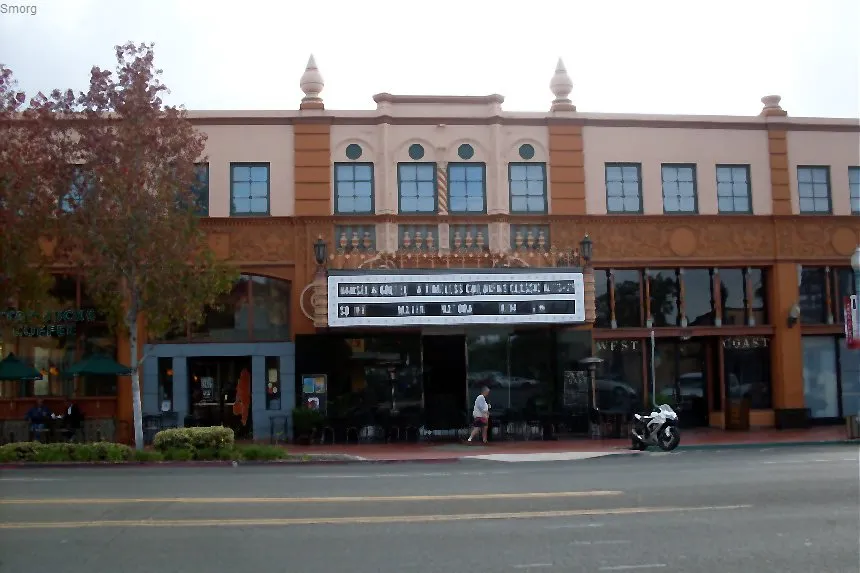
“Birch North Park Theater (Nov 2009)” by OperaSmorg, CC BY 3.0, via Wikimedia Commons.
Frequently asked questions
Are North Park and Golden Hill haunted? There is very little documented ghost material across either neighborhood, and what exists can be dated. The Observatory theater on University Avenue carries a Harold Lloyd and Bebe Daniels legend whose earliest known telling is a 2010 article written by the operator’s own fundraising officer, and the Lafayette Hotel carries a broader haunting claim that traces to paranormal blogs with no document, date or named witness behind it. Most stops here have no paranormal tradition at all, and none is invented for them.
Is the Lafayette Hotel in San Diego haunted? Claims exist and none of them have a record underneath. Cold spots, piano music, a figure in period dress, a boy in the basement and a self-operating elevator all appear on ghost-story aggregator sites that cite no newspaper, no hotel record and no witness. One name attached to the story also appears attached to a different downtown hotel’s ghost story entirely, which is what tends to happen when a name circulates faster than anyone checks it.
What happened in North Park in 1978? On a clear Monday morning in September 1978, a Pacific Southwest Airlines Boeing 727 and a Cessna 172 collided about three miles northeast of Lindbergh Field at 9:01 in the morning. All 135 people aboard the 727, both aboard the Cessna, and seven people on the ground were killed, and twenty-two homes were damaged or destroyed. It is the deadliest air disaster in California history. There is no marker at the site, the block was rebuilt, and the permanent memorial is in Balboa Park at the San Diego Air and Space Museum.
Why is it called North Park? Because in 1893 a farmer named James Monroe Hartley bought forty acres of what became lemon orchard directly north of the city’s big undeveloped park, which was not yet called Balboa, and named the tract Hartley’s North Park. He died in the 1904 drought years. His widow, Mary J. Hartley, is the name on the city’s own document as the subdivider who platted the streets and sold the lots.
Why is it called Golden Hill? Two developers petitioned the city in 1887, during a land boom, to rename a stretch of open ground, and the petition was granted on February 14th that year. One of the petitioners wrote a poem for the occasion that a local paper printed the following month. The boom collapsed within two years, and the name outlived the crash that produced it.
Does Haunted San Diego Ghost Tours run a tour in North Park or Golden Hill? No. This page is a sourced guide to the neighborhoods’ real history, not a stop on any of our routes. Our nightly tours run in Old Town and the Gaslamp Quarter.
Want the history told out loud, on the street where it happened? Our hosts run that every night in Old Town and the Gaslamp Quarter. Book Now. For San Diego’s stories from the seat of a bus, see the Haunted San Diego Ghost Bus.
Exploring other neighborhoods? The Gaslamp Quarter has its own nine-stop walk: Gaslamp Quarter Ghost Stories. Old Town runs from the Whaley House to Heritage Park: Old Town Ghost Stories. La Jolla’s coastline carries its own sourced history: La Jolla History and Ghost Stories. Downtown, Balboa Park, Coronado and Point Loma have their own guides too: Downtown San Diego Ghost Stories, Balboa Park Ghost Stories and Real History, Coronado Ghost Stories, and Point Loma History and Ghost Stories. The Embarcadero, Hillcrest and Bankers Hill, Little Italy, Mission Hills, and Mission Valley each have their own guides too: the Embarcadero, Hillcrest and Bankers Hill, Little Italy, Mission Hills, and Mission Valley.
Sources
- Alexander D. Bevil, University Heights Water Storage and Pumping Station Historic District, National Register of Historic Places Registration Form, ref. 13000417, listed June 25th, 2013. Source of the tower’s construction details, the hedged “world’s tallest” boast, the Tin Man nickname and its 1989 field-survey provenance, the resident survey quotations, and the used car lot lease.
- City of San Diego Historical Resources Board, staff report HRB-13-019, April 25th, 2013.
- City of San Diego, North Park Community Plan Area, 2016 Historic Resources Survey, Appendices A, C and D. Source of the theater’s sound-first design confirmation, the Hartley tract history, and the appendix row naming Mary J. Hartley as owner and developer of record.
- Allen H. Wright, “A Large Municipal Water-tower,” American City 31 (November 1924), p. 485. Cited through the National Register nomination rather than read directly.
- Pamela Arnold, “The Birch North Park Theatre, A New Life,” Once Upon a Time in North Park, North Park Historical Society, August 2010. Single source for the four Fox “firsts” and for the Lloyd and Daniels haunting claim; written by the fundraising officer of the company then operating the theater.
- “Harold Lloyd” and “Bebe Daniels,” Wikipedia. Source of the 1914 hiring, the engagement, and the two deaths eight days apart in March 1971.
- Lafayette Hotel, National Register of Historic Places Registration Form, ref. 12000443, listed July 31st, 2012. Source of the wartime construction account, the 1946 opening, and the Weissmuller finding quoted above.
- San Diego Union, June 23rd, 1946, footnoted inside the Lafayette nomination as the origin of the Weissmuller attribution. Not read directly; the single highest-value unread page behind that stop.
- “The Lafayette Hotel and Club,” Wikipedia, and Historic Hotels of America, same property. Source of the guest list, the Chargers tenancy and the Red Fox Room.
- American Ghost Stories, “The Haunting Secret of the Lafayette Hotel, San Diego, CA,” and Rami Ungar, “Paranormal Activity at the Lafayette Hotel,” January 30th, 2022. The only located sources for the cold spots, the boy, and the elevator; neither cites a document, a date or a witness.
- National Transportation Safety Board, Aircraft Accident Report: Pacific Southwest Airlines, Inc., Boeing 727-214, N533PS, and Gibbs Flite Center, Inc., Cessna 172, N7711G, San Diego, California, September 25, 1978, NTSB-AAR-79-05, adopted April 20th, 1979. Source of the sequence, the casualty and damage figures, the probable cause, the contributing-factor paragraph and the dissenting statement.
- Neal Matthews, San Diego Reader, April 18th, 1985, the paper’s own cover story on the city’s homicide detectives, which names the retired detective only by initial at his own request.
- San Diego Air & Space Museum, press release on the 45th anniversary of the crash, September 25th, 2023. Source of the memorial’s location, the “deadliest in California history” phrase, and the statement that two of the seven ground victims were children.
- Dedicated haunted-place listing sites, swept live September 21st, 2026, for claims tied to the 1978 crash site. Named here as a category rather than individually; four were found repeating each other, and none cites a document, a witness or an investigation.
- Save Our Heritage Organisation, “Golden Hill Fountain Grotto,” Most Endangered List, 2010.
- Save Our Heritage Organisation, “Golden Hill Fountain Grotto Gets Noticed,” Our Heritage eNews, July/August 2021. Source of the “relatively unknown” and “50 or more years” quotations.
- Richard Schulte, “More history at the Golden Hill Fountain Grotto,” Cool San Diego Sights, July 13th, 2021, reproducing the 2021 interpretive sign’s text.
- City of San Diego, Historical Landmarks Designated by the San Diego Historical Resources Board, full register text. Source of the two Golden Hill mansion designation dates.
- Jim Miller, “Excavating Golden Hill: The Mansion on the Hill,” San Diego Free Press, May 22nd, 2013. Source of the 1897 construction year, the builder’s trade, and the street-renaming motive, all single-author claims.
- Richard Schulte, “Unusual tower,” Cool San Diego Sights, November 12th, 2020. The account holding that the tower was altered later to resemble the fountain.
- San Diego Reader, “An evening at Villa Montezuma, Coda,” April 15th, 2015, quoting property records and the 1913 San Diego Union interview. The 1913 article itself has not been read directly.
- City of San Diego Planning Department, Sherman Heights Historic District background report, survey conducted winter 1986-87. Source of the street grid’s founding history.
- City of San Diego, Historical Site Board Register No. 130, “Greater Golden Hills Historic District #2,” adopted October 6th, 1978. Source of the 1887 renaming petition and the dedication poem quoted in the FAQ.
Take the tour
- Haunted San Diego Ghost Bus
- Gaslamp and Old Town Haunted Ghost Tour
- Paranormal Investigation History Tour
- Private Group Tours